

Blog
How to Audit Your Business SaaS Stack: A Step-by-Step Guide
A practical six-step saas stack audit guide for businesses that want to cut SaaS waste,…
13 min read
Read article →
A Zoho Commerce implementation partner sets up your online store on Zoho Commerce and connects it to the rest of your operations: product catalogue, payment gateways, shipping, GST invoicing through Zoho Books, stock sync with Zoho Inventory and customer data in Zoho CRM. This guide covers what that work involves for retail and e-commerce businesses, and how to choose a firm that has done it before.
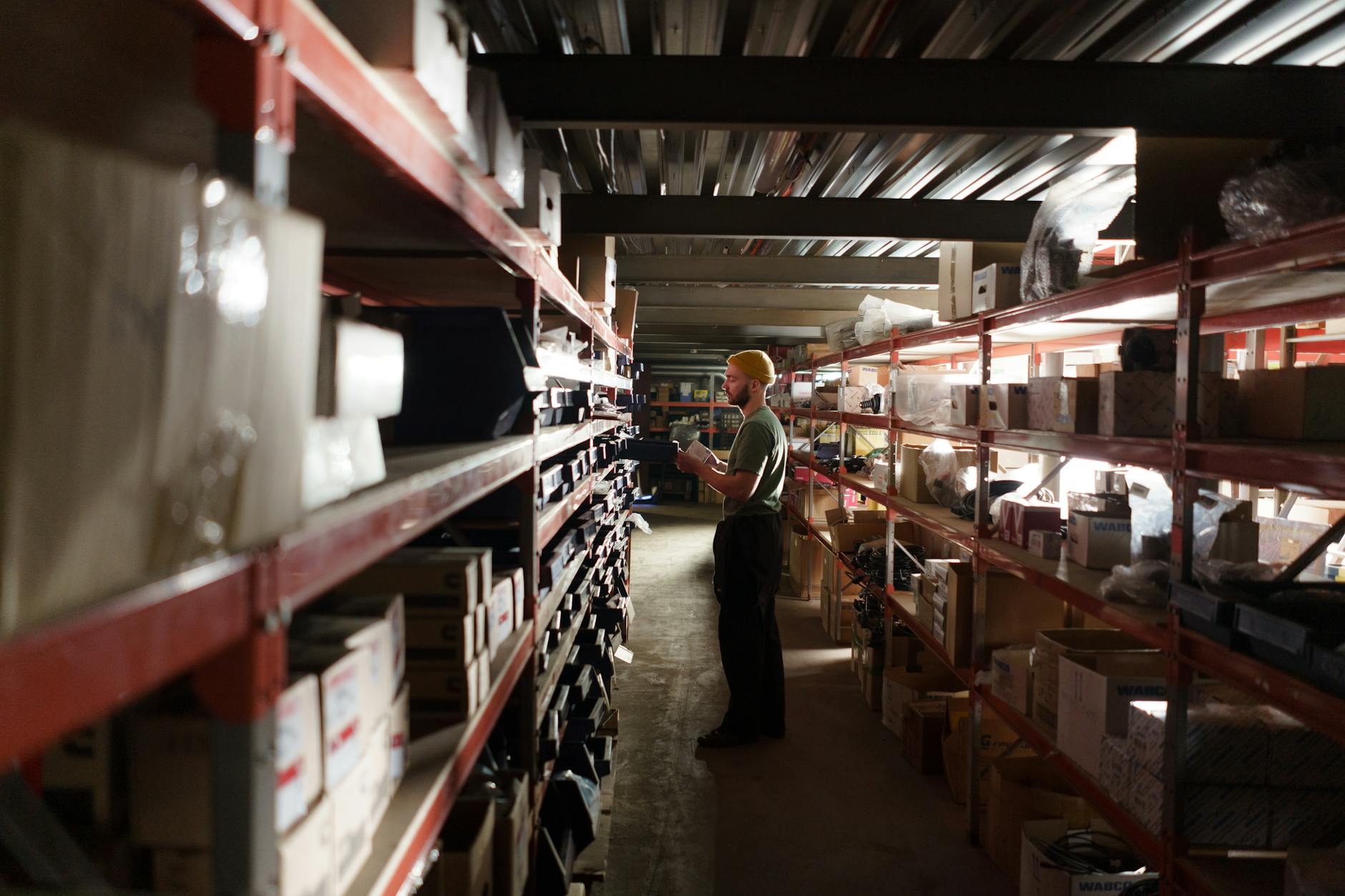
Running a retail or e-commerce operation means managing inventory across multiple channels, syncing online and offline sales, tracking customer behavior, and keeping financial records accurate. Zoho offers a full suite of apps that cover each of these functions, but configuring them for a retail workflow requires specific expertise. A zoho implementation partner for retail and ecommerce brings that expertise, mapping your business processes to the right Zoho modules and ensuring data flows correctly from day one.
Without proper configuration, retailers often end up with disconnected systems: inventory counts that do not match between the POS and the online store, customer records split across multiple databases, and manual reconciliation that eats hours every week. A Zoho certified partner benefits eliminates these gaps by designing integrations that keep every system in sync.
The difference between a self-managed Zoho setup and a partner-led implementation often shows up in measurable outcomes. Businesses working with experienced partners report 40% faster deployment timelines and significantly fewer data errors in the first 90 days. For retail operations where a single stockout or oversell can cost thousands, that accuracy matters.
Zoho’s ecosystem includes over 50 applications, but retail and e-commerce businesses typically rely on a core set of 5 to 7 apps. A choosing a Zoho implementation partner who understands retail will configure these apps as an integrated system rather than standalone tools.
Zoho CRM serves as the central customer database for retail operations. It stores purchase history, communication preferences, loyalty tier data, and support interactions. For e-commerce businesses, the CRM captures browsing behavior and cart abandonment data when connected to your storefront. Partners configure custom modules for retail-specific fields like preferred store location, product category preferences, and average order value segments.
Zoho Inventory handles warehouse management, stock transfers, and multi-location tracking. Retail businesses with both physical stores and online channels need real-time inventory visibility to prevent overselling. A zoho ecommerce setup partner configures reorder points, safety stock levels, and automatic purchase order generation based on sales velocity. The system supports batch tracking and serial number management for businesses that need item-level traceability.
Zoho Books automates invoicing, expense tracking, tax calculations, and bank reconciliation. For retail operations, the key configuration involves setting up tax rules for different product categories and jurisdictions, connecting payment gateways, and building reports that separate online revenue from in-store sales. Partners ensure that every transaction from every channel flows into Books with the correct tax treatment and cost center allocation.
Zoho Commerce provides the storefront layer for businesses that sell online. It connects natively to Zoho Inventory and Zoho CRM, which means product catalog changes, stock levels, and customer data stay synchronized without third-party middleware. A zoho retail implementation partner configures product variants, shipping rules, discount structures, and checkout workflows specific to your product catalog.
SalesIQ adds live chat, visitor tracking, and chatbot capabilities to your online store. For e-commerce, it identifies high-intent visitors based on page views, time on site, and cart value, then triggers proactive chat invitations. Partners build custom chatbot flows that handle common retail queries like order status, return policies, and product availability without requiring a human agent.
The biggest technical challenge for retail businesses is creating a unified view of sales, inventory, and customers across all channels. A zoho implementation partner for retail and ecommerce designs this integration layer, connecting POS systems, online storefronts, and marketplace listings into a single data flow.
Here is what a properly configured omnichannel setup looks like in Zoho:
| Channel | Zoho App | Data Synced |
|---|---|---|
| Physical store POS | Zoho Inventory + Books | Sales, stock levels, payments |
| Online store | Zoho Commerce + Inventory | Orders, product catalog, stock |
| Amazon / eBay | Zoho Inventory (marketplace integration) | Orders, inventory, pricing |
| Social commerce | Zoho CRM + SalesIQ | Leads, conversations, orders |
The critical piece is bidirectional sync. When a customer buys a product in-store, the online stock count updates within minutes. When an online order ships from a warehouse, the inventory ledger in Books reflects the cost of goods sold automatically. Partners configure webhook triggers and scheduled syncs to maintain this accuracy without manual intervention.
For Zoho for retail businesses operating in multiple locations, the omnichannel layer also handles inter-warehouse transfers. If Store A runs low on a product but Store B has excess stock, the system can generate a transfer order and update both locations once the transfer completes.

Inventory accuracy is the foundation of retail profitability. A zoho consulting retail business partner configures Zoho Inventory with rules and automations that match your specific supply chain.
Partners calculate reorder points based on historical sales data, lead times from suppliers, and seasonal demand patterns. For a product that sells 50 units per week with a 2-week supplier lead time, the reorder point would be set at 120 units (100 for the lead time plus a 20-unit safety buffer). Zoho Inventory triggers a purchase order automatically when stock hits this threshold.
E-commerce businesses with multiple warehouses need routing logic that minimizes shipping costs and delivery times. Partners configure fulfillment rules based on customer location, warehouse stock availability, and carrier rates. A customer in the western region gets their order shipped from the nearest warehouse that has the item in stock, reducing transit time from 5 days to 2.
Returns handling in retail requires coordination between Zoho Inventory (stock adjustment), Zoho Books (refund processing), and Zoho CRM (customer communication). Partners build workflow rules that trigger the right actions in each app when a return is initiated. The customer receives a return authorization email from CRM, the inventory system creates a return receipt, and Books processes the refund once the item is inspected and restocked.
Retail businesses that sell product bundles need Zoho Inventory configured to track component-level stock. When a gift set containing 3 individual products sells, the system deducts each component from inventory rather than tracking the bundle as a single SKU. This prevents scenarios where individual product sales deplete stock that was reserved for bundles.
Acquiring a new customer costs 5 to 7 times more than retaining an existing one. Zoho CRM and Zoho Campaigns, configured by an experienced zoho implementation partner for retail and ecommerce, enable automated retention workflows that keep customers coming back.
Partners set up custom fields and scoring rules in Zoho CRM that categorize customers into loyalty tiers based on purchase frequency, total spend, and recency. A typical three-tier system might look like this:
Each tier triggers different communication workflows. Gold customers receive early access to new products and exclusive discount codes. Silver customers get personalized product recommendations based on their purchase history. Bronze customers receive re-engagement campaigns if they have not purchased in 60 days.
For Zoho ecommerce setup configurations, abandoned cart recovery is one of the highest-ROI automations. Partners configure a three-email sequence: a reminder at 1 hour, a product-focused follow-up at 24 hours, and a limited-time discount at 72 hours. Businesses typically recover 8% to 15% of abandoned carts with this sequence, which translates directly to revenue that would otherwise be lost.
Automated review request emails sent 7 to 14 days after delivery increase product review counts by 30% to 50%. Partners configure the timing based on product category. Fashion items get a 7-day delay (enough time to try the product), while electronics get 14 days (more time needed for evaluation). These reviews feed back into the product pages on Zoho Commerce, improving conversion rates for future visitors.
Zoho Commerce is the storefront layer of the stack, and a partner configuring it properly works through six areas. Product catalogue structure first: categories, variants, attributes and images organised so filters and search behave the way shoppers expect. Payment gateways next: Razorpay, PayU or Stripe depending on your market, with failure handling and settlement reconciliation agreed up front. Shipping third: rate rules, serviceability and tracking through carriers or aggregators such as Shiprocket.
Then the back office. Tax: GST rates, HSN codes and invoice numbering flowing into Zoho Books without manual re-entry. Stock: Zoho Inventory as the single source of truth, so the storefront never sells what the warehouse does not hold. Customers: orders and contact history landing in Zoho CRM so support and marketing see one record per buyer.
A partner who has shipped real Zoho Commerce stores will show you a working storefront and walk you through the reconciliation flow. One who has only done CRM projects will improvise, and it shows at month end.
Not every Zoho partner has the domain knowledge required for retail and e-commerce implementations. Here are the specific criteria to evaluate when selecting a zoho pos inventory partner.
Ask for case studies from retail or e-commerce clients. A qualified partner should be able to describe specific configurations they have built: POS integrations, marketplace connections, inventory sync setups, and omnichannel workflows. Generic CRM implementations do not prepare a partner for the complexity of retail data flows.
Retail businesses use tools outside the Zoho ecosystem: Shopify, WooCommerce, Amazon Seller Central, shipping providers like ShipStation, and payment processors like Stripe. Your partner should demonstrate experience connecting these external systems to Zoho through APIs, Zoho Flow, or custom middleware.
The first 90 days after go-live are critical for retail implementations. Seasonal demand spikes, new product launches, and promotional events all stress-test the system configuration. Your partner should offer dedicated support during this period with defined response times for issues that affect order processing or inventory accuracy.
Moving from a legacy retail system to Zoho requires migrating product catalogs, customer databases, order history, and financial records. Partners with retail experience know how to map fields from common retail platforms (Lightspeed, Square, Vend) to Zoho’s data structure without losing historical data or creating duplicate records.
Retail teams have high turnover rates, which means your Zoho configuration needs clear documentation and training materials. A good partner delivers role-based training: store managers learn inventory and reporting, sales staff learn CRM and POS operations, and finance teams learn Books and reconciliation workflows.
For an overview of Zoho’s retail configuration, the Zoho for retail businesses in India guide covers point-of-sale, inventory synchronisation, and customer loyalty workflows. For e-commerce specifically, the Zoho for e-commerce guide covers order management, returns, and marketplace integration.
How long does a Zoho implementation take for a retail business?
A standard retail implementation with CRM, Inventory, Books, and one online sales channel takes 6 to 10 weeks. Businesses with multiple physical locations, marketplace integrations, and complex inventory rules may require 12 to 16 weeks. The timeline depends on data migration volume and the number of custom workflows needed.
Can Zoho handle both online and in-store sales in one system?
Yes. Zoho Commerce manages the online storefront while Zoho Inventory and Zoho Books handle POS transactions from physical stores. When configured by a certified partner, all sales channels feed into a single inventory ledger and customer database, giving you real-time visibility across every channel.
What is the cost of hiring a Zoho implementation partner for retail?
Implementation costs vary based on the number of Zoho apps, complexity of integrations, and data migration requirements. A basic retail setup with CRM and Inventory typically starts at $3,000 to $5,000. Full omnichannel implementations with marketplace integrations, custom workflows, and training can range from $8,000 to $20,000.
Does Zoho integrate with Shopify or WooCommerce?
Zoho Inventory offers native integrations with both Shopify and WooCommerce. These connections sync product listings, stock levels, and orders between your e-commerce platform and Zoho. A Zoho partner configures the sync rules, field mappings, and error handling to ensure data accuracy across both systems.
What Zoho apps are essential for an e-commerce business?
The core stack for e-commerce includes Zoho CRM for customer management, Zoho Inventory for stock control and order fulfillment, Zoho Books for accounting, and Zoho Campaigns for email marketing. Businesses selling through their own website also benefit from Zoho Commerce for the storefront and Zoho SalesIQ for live chat and visitor tracking.
Get your retail or e-commerce Zoho implementation configured by certified experts. From inventory sync to omnichannel workflows, we build systems that scale with your business.
Book a free consultationA well-configured Zoho ecosystem turns disconnected retail operations into a unified system where inventory, sales, customers, and finances stay in sync across every channel. The right implementation partner makes that happen on a timeline and budget that fits your business, with the training and support to keep it running as you grow.
Tell us what you are working through and a senior architect from our team will get back to you with a straight answer, usually within a couple of working days. No bot, no hard sell.
A senior architect will get back to you at , usually within a couple of working days. Worth checking your spam folder, just in case.
A practical six-step saas stack audit guide for businesses that want to cut SaaS waste,…

On this page Zoho CRM handles your leads, contacts, and deals. Zapier connects it to…

On this page Support agents working in Zendesk spend significant time switching to NetSuite to…
Tell us what you are actually trying to do. You will get a straight answer from a senior architect who has done this before, not a sales rep.
A senior architect will get back to you at , usually within a couple of working days. Worth checking your spam folder, just in case.
Ask it now and a senior architect will get back to you, usually within a couple of working days. It goes to our team, not a mailing list.
A senior architect will get back to you at , usually within a couple of working days. Worth checking your spam folder, just in case.