

Blog
Zoho Desk SLA Configuration: Policies, Business Hours, and Escalation Rules
Step-by-step Zoho Desk SLA configuration: response and resolution targets, business hours schedules, multi-tier escalation rules,…
13 min read
Read article →
Order-to-cash automation is one of the highest-return investments a mid-market B2B company can make, not because the individual tasks are particularly complex, but because the entire cycle is almost always stitched together with manual handoffs, disconnected systems, and exception handling that scales poorly with revenue growth. When order volumes double, the AR team doesn’t double; the cracks just widen.
This guide covers every stage of the order-to-cash process, where and why manual execution stalls revenue, how to automate each stage, and which metrics tell you whether the improvements are actually working. Tool examples draw on Zoho and NetSuite, two widely used platforms in mid-market operations, but the principles apply regardless of your stack.
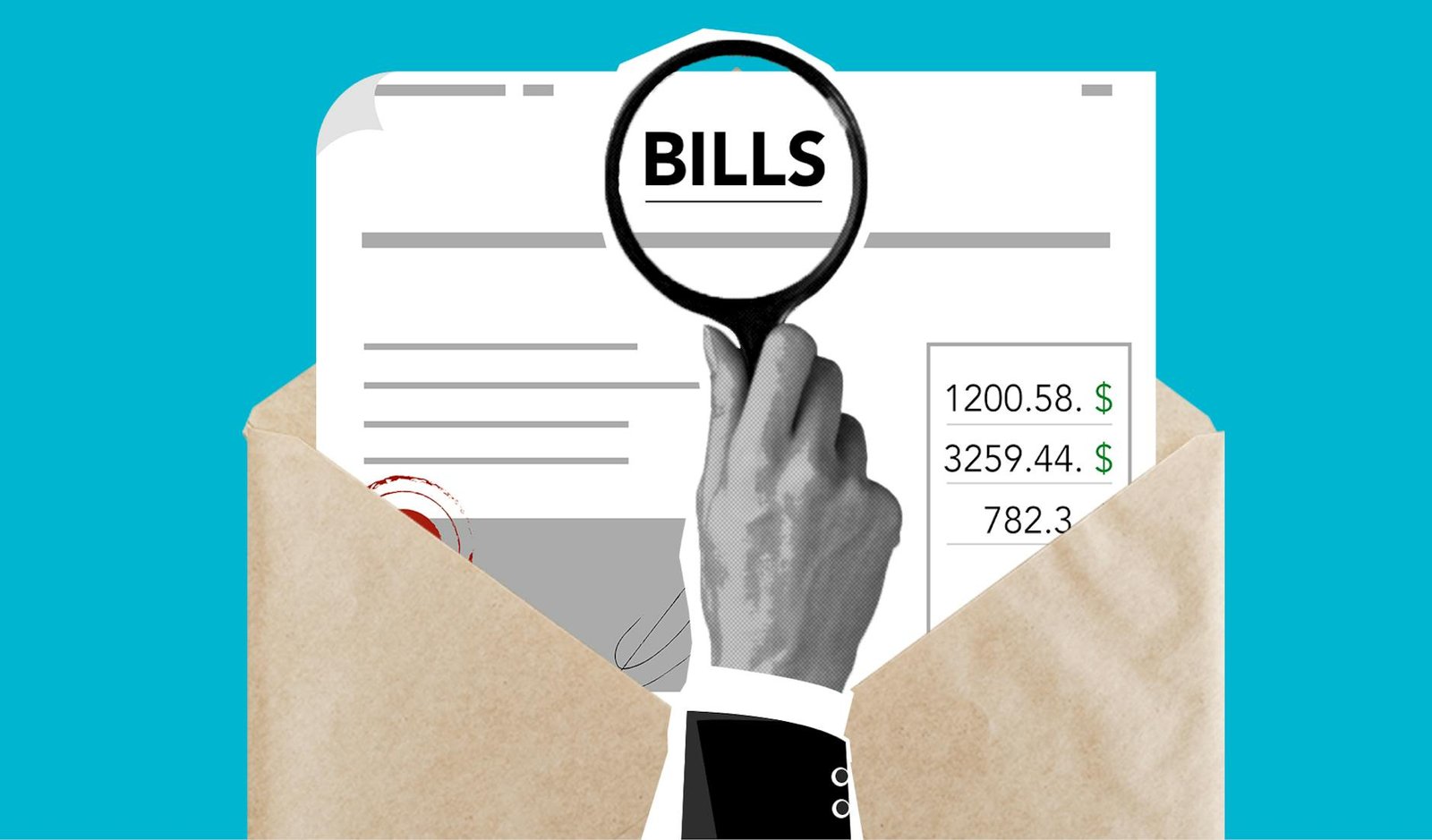
The order to cash process, often abbreviated O2C or OTC, covers everything that happens from the moment a customer agrees to buy something until the payment is received, matched, and reconciled in your books. It spans sales, finance, operations, and sometimes logistics, making it one of the few business processes that touches almost every revenue-generating department.
For finance and revenue operations teams, O2C performance directly determines:
A fragmented O2C cycle costs more than just time. IOFM and similar industry bodies have consistently found that organizations with highly automated O2C processes collect cash 30–40% faster than those relying on manual workflows, while also reducing billing error rates by a comparable margin. At scale, that gap compounds into meaningful working capital differences.
Before automating anything, it helps to define the boundaries of what you are actually automating. The order-to-cash cycle is typically broken into seven discrete stages, though the handoffs between them are where most of the friction lives.
A sales rep or CPQ tool generates a quote. The customer accepts. The accepted quote becomes a sales order in your CRM or ERP. At this stage, pricing, discount approvals, and product configurations need to be validated before the order moves downstream.
The confirmed order triggers fulfillment, whether that means physical inventory, a software provisioning workflow, or a professional services kickoff. Inventory checks, delivery scheduling, and service activation all occur here.
For new customers or large orders, a credit check may be required. Internal credit limits, external bureau data, and payment history all feed into a go / hold decision. Delays here often stall the entire downstream cycle.
Once fulfillment is confirmed, an invoice is generated. This needs to reflect the exact terms on the signed order, correct line items, pricing, taxes, payment terms, and billing address. Discrepancies at this stage generate disputes that can delay payment by weeks.
After the invoice goes out, the AR team monitors for payment, sends reminders, escalates overdue accounts, and handles dispute resolution. This is the stage most associated with reducing days sales outstanding through structured follow-up workflows.
Payments arrive via bank transfer, ACH, credit card, or check. Each payment method brings its own processing timeline and reconciliation requirements. Matching incoming payments to open invoices accurately and quickly is more difficult than it sounds when volume is high.
The final stage: matching payments to invoices in the GL, clearing open receivables, and ensuring the books reflect reality. Errors here affect close timelines and audit readiness. Platforms like NetSuite automated bank reconciliation apply matching rules that dramatically reduce manual clearing time.
Most O2C failures are not dramatic system outages. They are accumulations of small friction points, a quote that has to be manually re-entered into the ERP, an invoice that goes out with last quarter’s tax rate, a payment that sits unmatched for three days because the customer paid a different amount than was invoiced. The compounding effect on working capital is well documented: see the concrete supplier AR turnaround case study for a real-world example of what fixing these bottlenecks delivers.
The most common breakpoints, in order of how often they appear in practice:
Sales closes a deal in the CRM. Finance manually re-keys the order into the ERP. At low volumes this is annoying. At high volumes it is a source of consistent billing errors, order delays, and reconciliation headaches downstream.
Credit checks that depend on one person’s inbox create single points of failure. When that person is out, orders queue indefinitely.
Pricing exceptions, contract-specific discounts, and multi-currency deals are hard to apply consistently without system-level rules. A 2–3% invoice error rate sounds small until you calculate how many disputes and credit notes it generates per month.
AR teams working from spreadsheet aging reports apply inconsistent follow-up cadences. High-value overdue accounts get attention; smaller invoices slip. Both types affect DSO.
Manual matching of incoming bank transactions to open invoices is time-consuming and prone to mismatches, particularly when customers pay multiple invoices in a single remittance or pay partial amounts.
Finance, sales, and operations each have their own view of order status. Without a unified data layer, revenue forecasts and cash flow projections are always slightly stale.

Automating O2C is not a single project, it is a sequenced set of improvements, each building on the last. The following maps automation actions to each stage.
Configure-price-quote (CPQ) tools can enforce pricing rules, require approval workflows for non-standard discounts, and generate quotes that are pre-validated against your product catalog. When a quote is accepted, a native integration pushes a confirmed sales order into the ERP, no re-entry required. In Zoho’s ecosystem, Zoho CRM and Zoho Books handle this handoff natively; NetSuite’s CPQ module accomplishes the same within a single platform.
Confirmed orders should trigger downstream workflows automatically: inventory reservation, warehouse pick lists, provisioning requests, or project kickoff tasks depending on your business model. Rules-based routing assigns orders to the correct fulfillment queue based on product type, region, or customer tier.
Replace inbox-dependent credit approvals with automated decisioning. Set credit limits by customer segment, pull bureau data via API for new customers, and auto-approve orders below defined thresholds. Exceptions that genuinely require human review go into a structured queue with SLA timers, not someone’s email.
Invoice generation should be a zero-touch process for standard orders. The ERP pulls confirmed order data, applies contract pricing, calculates tax via a connected tax engine (Avalara and TaxJar are common choices), and sends the invoice on a defined schedule. For milestone-based or usage-based billing, automation rules fire invoices when the triggering conditions are met, not when someone remembers to check.
Modern AR platforms (and the AR modules in Zoho Books and NetSuite) let you build dunning sequences that run automatically: a polite reminder at 7 days, a firmer notice at 14, an escalation to account management at 30. Sequences can differ by customer segment, invoice value, or relationship tier. The human intervention point is reserved for genuinely disputed invoices, not routine follow-up.
Payment links embedded in invoices let customers pay directly via ACH or card without manual bank transfer friction. On the receipt side, cash application automation uses remittance data, invoice numbers, and fuzzy-matching logic to apply incoming payments to open AR items. This is where automated payment reconciliation between your payment processor and accounting platform produces the clearest time savings.
Order-to-cash automation only works at scale when the systems involved share data in real time. The typical mid-market O2C stack involves at least three layers: a CRM managing customer and deal data, an ERP handling orders, inventory, and financials, and one or more billing or payment tools managing invoicing and collections.
The integration architecture matters as much as the tools themselves. Point-to-point integrations between individual systems work at low volume but become fragile as the number of connected tools grows. A middleware layer, iPaaS platforms like Zoho Flow, MuleSoft, or Dell Boomi, creates a more maintainable integration architecture where data mappings are centralized rather than duplicated across five separate connectors.
For companies already in the Zoho ecosystem, the CRM-to-Books pipeline is a practical starting point for O2C automation. Zoho CRM handles deals and quotes; Zoho Books manages invoicing, AR, and payment collection; Zoho Inventory handles order management for product businesses. Native integrations between these modules mean a won deal in CRM can flow through to a drafted invoice in Books with minimal configuration. Zoho Analytics provides the reporting layer across the stack.
NetSuite takes a different architectural approach: a unified NetSuite ERP platform that covers CRM, order management, inventory, billing, and financials in one database. This eliminates many of the integration points that create O2C friction in multi-tool stacks. NetSuite accounts receivable automation is particularly well-developed, with built-in dunning, cash application, and aging analysis. The tradeoff is implementation complexity and cost, NetSuite is better suited to companies with more complex order management needs or higher transaction volumes.
Each of these handoffs is a potential data loss or delay point. Map them explicitly before selecting tools, not after.
Automation projects without measurement quickly become shelfware. The following KPIs give finance and revenue operations teams a clear view of whether O2C improvements are delivering.
| KPI | What It Measures | Typical Benchmark |
|---|---|---|
| Days Sales Outstanding (DSO) | Average days from invoice to payment | 30–45 days (B2B, net-30 terms) |
| Order Cycle Time | Time from order receipt to invoice sent | Under 24 hours for standard orders |
| Invoice Accuracy Rate | % of invoices sent without errors or disputes | 98%+ for automated processes |
| Cash Application Rate | % of payments auto-matched to invoices | 85–95% with automation |
| Collections Effectiveness Index (CEI) | How much of collectible AR was actually collected in a period | Above 80% is considered strong |
| Dispute Rate | % of invoices that generate a formal dispute | Below 2% for well-automated O2C |
| Cost per Invoice | Total AR cost divided by invoice volume | $4–$10 automated vs. $12–$30 manual |
DSO is the headline metric for most CFOs, but it is also a lagging indicator. Order cycle time and invoice accuracy rate are leading indicators, they predict future DSO before it shows up in the aging report. Track both. APQC benchmarking data provides industry-level comparisons for most of these KPIs.
Pull 90 days of historical data across each KPI before beginning an automation project. Without a baseline, you cannot demonstrate ROI, prioritize where to focus first, or detect regressions when something breaks. This step is consistently skipped and consistently regretted.

Implementing O2C automation is a multi-phase project. The following checklist reflects the sequencing that tends to produce the fastest payback while keeping operational risk manageable.
Dispute resolution, credit limit exceptions, and high-value collections escalations should stay human-in-the-loop, at least initially. These are relationship-sensitive interactions where a bad automated response costs more than the time saved. Build the automation foundation first, then revisit where human judgment remains essential.
Several patterns appear repeatedly in O2C automation projects that underdeliver:
Most mid-market B2B companies have the tools for O2C automation already, they just haven’t connected the stages into a coherent cycle. A focused 90-day engagement can reduce DSO, eliminate billing errors, and free your AR team to work exceptions rather than routine follow-up.
Book a free consultationWhat is order-to-cash automation?
Order-to-cash automation refers to the use of software rules, integrations, and workflow tools to replace manual steps across the full O2C cycle, from quote creation through payment reconciliation. The goal is to reduce cycle time, eliminate errors, lower the cost of processing each transaction, and improve cash flow predictability.
What is the difference between order-to-cash and quote-to-cash?
Quote-to-cash (Q2C) includes the full sales cycle from generating a quote through payment, which means it also covers CPQ, pricing approval, and contract execution stages that precede order creation. Order-to-cash traditionally begins when the customer order is confirmed and focuses on fulfillment, invoicing, AR, and cash application. In practice, many teams use the terms interchangeably, and automation projects often cover both.
How does O2C automation affect DSO?
Faster invoice generation, structured AR dunning sequences, and automated payment matching each contribute to lower DSO. Invoice accuracy is particularly important, billing errors are one of the most common reasons customers delay payment. Organizations with fully automated O2C processes typically achieve DSO 10–20 days lower than those relying on manual workflows, though results vary by industry and customer mix.
Which tools are commonly used for order-to-cash automation?
Common tools include ERP platforms like NetSuite and SAP for order management and invoicing, CRM platforms like Zoho CRM or Salesforce for the quote-to-order handoff, dedicated AR automation tools like HighRadius or Tesorio for collections, and payment processors with built-in reconciliation capabilities. The right stack depends on your transaction volume, existing systems, and the specific O2C stages causing the most friction.
Where should a mid-market company start with O2C automation?
Start with the stage generating the most manual effort or the most downstream errors. For most mid-market B2B companies, that is either the CRM-to-ERP handoff (eliminating order re-entry) or AR collections (replacing spreadsheet-based follow-up with structured dunning). Fix the data foundation first, clean customer master data and aligned product pricing, before layering in automation, or you will automate the errors rather than eliminate them.
Can O2C automation be implemented without replacing existing systems?
Yes, in most cases. O2C automation is often achieved by adding integrations and workflow rules between existing tools rather than replacing them. An iPaaS layer connecting your CRM, ERP, and billing platform can eliminate manual handoffs without a full system replacement. The scope of what you can automate depends on the API capabilities of your existing tools, but most modern platforms support the integrations required for the highest-impact O2C workflows.
Tell us what you are working through and a senior architect from our team will get back to you with a straight answer, usually within a couple of working days. No bot, no hard sell.
A senior architect will get back to you at , usually within a couple of working days. Worth checking your spam folder, just in case.
Step-by-step Zoho Desk SLA configuration: response and resolution targets, business hours schedules, multi-tier escalation rules,…

On this page Zoho integrations are the difference between a suite of siloed tools and…
Learn how law firms use Zoho WorkDrive for matter-based folder structures, version control, access permissions,…
Tell us what you are actually trying to do. You will get a straight answer from a senior architect who has done this before, not a sales rep.
A senior architect will get back to you at , usually within a couple of working days. Worth checking your spam folder, just in case.
Ask it now and a senior architect will get back to you, usually within a couple of working days. It goes to our team, not a mailing list.
A senior architect will get back to you at , usually within a couple of working days. Worth checking your spam folder, just in case.