

Blog
How to File GST Returns with Zoho Books: Step-by-Step Guide
Complete guide to filing GSTR-1, GSTR-3B, and annual GST returns using Zoho Books. Covers setup,…
9 min read
Read article →
When Indian businesses start evaluating ERP and CRM platforms, the zoho vs netsuite implementation question surfaces quickly. And it almost always gets framed the wrong way. Most comparison articles focus on feature lists, when the real decision hinges on company size, operational complexity, compliance requirements, and how much your team can absorb during a rollout. A 40-person manufacturing unit in Pune has entirely different needs from a 300-person multi-entity group with operations in India, Singapore, and the UAE. This post cuts through the feature noise and gives Indian decision-makers a grounded framework: where each platform actually wins, what implementation costs look like in INR terms, how partner types differ, and five practical questions that will tell you which direction to go. If you have read vendor comparison pages and still feel uncertain, this is the post that should clarify it.

Both Zoho and NetSuite cover the core business functions: accounting, CRM, inventory, purchasing, and reporting. At the feature level, a sales manager demoing both platforms will find most of what they need in either product. The meaningful differences show up in depth of financial consolidation, multi-entity handling, compliance automation, and how far you can push customisation without needing a developer full-time.
NetSuite was built from the ground up as a cloud ERP for companies with complex financial structures. Its general ledger handles multi-book accounting, multi-currency revaluation, and intercompany eliminations natively. Zoho Books, by contrast, is designed for businesses that want clean GST-compliant accounting with sensible defaults, not a configurable chart of accounts spanning eight legal entities.
The other factor that rarely appears in comparison articles is implementation velocity. Zoho One can be live across CRM, Books, Inventory, and Desk in six to ten weeks for a company with standard processes. A NetSuite ERP implementation for a mid-size manufacturer typically runs five to nine months, requires a dedicated project manager on the client side, and involves a formal blueprint and configuration phase before any data migration touches production.
So before you look at pricing or partner options, the first question to answer is: does your company need a platform that is fast and India-native by default, or one that is architecturally built for complexity and global scale? The answer to that determines everything else, including who you hire to implement it.
Zoho has a structural advantage for Indian companies with fewer than 150 users, a single GST registration, and operations confined to one or two states. Every product in the Zoho suite, Books, Inventory, Payroll, People, ships with India-specific compliance built in. GST returns (GSTR-1, GSTR-3B, GSTR-2A reconciliation), TDS deduction tracking, professional tax, and e-invoicing under the IRP framework are not add-ons. They are part of the default setup.
For a trading company in Ahmedabad buying from 60 suppliers and selling to 400 retailers, Zoho Inventory with Books integration handles day-to-day operations without a single customisation. The GST portal integration pushes return data directly. E-way bills generate from delivery challans. Purchase orders reconcile against GRNs automatically. That is not a trivial thing to have out of the box.
Zoho also wins on time-to-value. A Zoho implementation partner working with a 30-person company can typically have the core modules configured, data migrated, and staff trained within eight weeks. The lower implementation cost means a smaller business can afford proper partner support rather than trying to DIY it.
User pricing under Zoho One at approximately Rs 7,500 per user per month (annual billing) means a 50-user company is spending around Rs 4.5 lakh per month or Rs 54 lakh per year on licences alone. That is a significant but manageable number for an established SMB. The return on that investment comes from consolidating CRM, accounting, HR, helpdesk, and project management under one login rather than stitching together five separate SaaS tools.
Zoho also suits companies that want to start with two or three modules and expand progressively. Because everything is under one licence, turning on Zoho Projects or Zoho Campaigns does not require a new procurement cycle. That flexibility is genuinely useful for growing businesses that do not yet know exactly which functions they will automate next.
NetSuite earns its higher price point when the business has complexity that Zoho’s architecture was not designed to handle. The clearest signal is multiple legal entities under one group. A holding company with four subsidiaries across India, Dubai, and Singapore needs consolidated financial statements, intercompany transactions that eliminate on consolidation, and currency revaluation that runs automatically at month-end. NetSuite’s OneWorld module handles all of this natively. Zoho’s multi-organisation setup requires separate Zoho Books accounts per entity, which means manual consolidation in a spreadsheet or a third-party reporting tool.
Manufacturers with bill of materials (BOM), work orders, and shop floor routing also fit NetSuite better. NetSuite Manufacturing includes MRP (material requirements planning), production scheduling, labour tracking, and WIP accounting. Zoho Inventory covers basic assemblies but is not a production ERP. A company making injection-moulded components with 200 SKUs, subcontract operations, and quality inspection checkpoints will outgrow Zoho’s manufacturing capabilities within six months of going live.
Revenue recognition is another area where NetSuite has no real competitor in the mid-market. For SaaS companies, project-based firms, or anyone dealing with milestone billing under Ind AS 115, NetSuite’s revenue recognition module automates the schedule, the journal entries, and the deferred revenue waterfall. Zoho Books handles straight-line billing but does not have a native multi-element arrangement engine.
The user threshold matters too. Companies with 150 or more ERP users tend to find NetSuite’s role-based access controls, audit trails, and workflow approval engine more manageable at scale. A NetSuite implementation partner will typically spend several weeks in the blueprint phase mapping roles, permissions, and approval hierarchies before a single configuration is made in the sandbox.

Pricing is where the comparison gets concrete. The table below shows indicative figures for Indian companies in 2025-26. These are not quotes: actual costs vary by negotiation, module selection, and partner rates.
| Cost Element | Zoho One | NetSuite |
|---|---|---|
| Per-user licence (annual) | ~Rs 7,500/user/month | ~$99/user/month (~Rs 8,500) |
| Base platform fee | None (Zoho One covers all apps) | $999/month (~Rs 85,000) minimum |
| 30-user annual licence cost | ~Rs 27 lakh/year | ~Rs 41 lakh/year (base + users) |
| Implementation cost (SMB, 3-4 modules) | Rs 3 lakh to Rs 8 lakh | Rs 18 lakh to Rs 45 lakh |
| Implementation timeline | 6 to 12 weeks | 4 to 9 months |
| Annual support retainer (typical) | Rs 1.5 lakh to Rs 4 lakh | Rs 6 lakh to Rs 18 lakh |
The gap widens when you account for the internal resource cost. A NetSuite implementation requires a project owner on the client side who can commit 30 to 50 percent of their time for five months. For a lean team, that is a real organisational cost that does not show up in any vendor quote. Zoho implementations are less demanding on internal bandwidth, which matters for companies where the operations head is also the de facto IT manager.
One nuance worth noting: NetSuite’s per-user cost in USD means Indian companies are exposed to rupee-dollar movement. At Rs 85 per dollar, a 30-user NetSuite licence costs roughly Rs 41 lakh per year. If the rupee weakens to Rs 90, that same licence becomes Rs 43.5 lakh with no change in your operations. Zoho’s rupee pricing eliminates that exposure entirely.
The implementation partner you choose has a larger impact on outcomes than most buyers expect. Zoho’s partner network in India is large, with several hundred registered partners ranging from one-person consultants to 50-person teams. That breadth means you can find a specialist who knows your industry, manufacturing, distribution, professional services, education, and has done that exact implementation before.
NetSuite’s Oracle Partner Network is more selective. There are fewer NetSuite partners in India, and the good ones tend to work with larger deal sizes. Expect a minimum project engagement of Rs 15 to 18 lakh for a serious NetSuite partner. Partners who charge less than that are often reselling without deep technical capability, which creates problems when your go-live hits a customisation wall.
The skill profile also differs. A Zoho partner needs strong CRM and Books configuration knowledge, an understanding of Zoho Flow for automation, and familiarity with Deluge (Zoho’s scripting language) for custom functions. A NetSuite partner needs SuiteScript 2.x development experience, knowledge of SuiteFlow and SuiteBuilder, and ideally an understanding of the client’s industry vertical at a process level.
When evaluating partners, ask three specific things: how many go-lives have they completed in the past 18 months, can they provide two client references in your industry, and who specifically will be doing the configuration work (partner principal or a junior consultant). Those three questions will surface the difference between a capable partner and one that is over-promising. You can review real deployment outcomes from our own work on the Aaxonix case studies page.
A pattern that works well for certain Indian companies is running Zoho CRM for the sales team while finance and operations run on NetSuite ERP. This is not a workaround. It is a deliberate architecture that makes sense when the sales organisation is large, fast-moving, and needs lightweight CRM functionality, while the back office has complexity that requires NetSuite’s financial engine.
The Zoho CRM platform is significantly easier for sales teams to adopt than NetSuite CRM. Mobile apps, call logging, lead scoring, and email integration are more polished in Zoho. Sales reps resist logging into a system that feels like an accounting tool. Zoho CRM does not feel like that.
The integration layer between the two systems typically handles: closed-won opportunity in Zoho CRM creating a customer record and sales order in NetSuite, invoice status from NetSuite syncing back to the CRM opportunity for collections visibility, and product catalogue syncing from NetSuite to Zoho CRM so reps are always quoting current prices.
This hybrid setup requires a competent integration layer: either a native connector, a middleware platform like Celigo or Boomi, or custom API work. It adds complexity and cost compared to a single-platform deployment. But for companies where the sales team is 25 people who need a clean mobile CRM and the finance team is running complex inventory costing across three warehouses, it is the right answer.
The hybrid approach is also useful as a migration path. Some companies start on Zoho entirely, then as they scale, they move ERP functions to NetSuite while keeping Zoho CRM and Zoho Desk where those products are strongest.
Rather than a generic checklist, these five questions are calibrated to surface the factors that genuinely separate Zoho-fit companies from NetSuite-fit companies in the Indian context.
1. How many legal entities need to share data? If the answer is one, Zoho handles it well. If the answer is two or more with intercompany billing or consolidated reporting requirements, NetSuite is the safer choice.
2. Do you run manufacturing with BOMs, work orders, or MRP? A simple assembly operation can work in Zoho Inventory. Anything involving production scheduling, capacity planning, or multi-level BOMs with subcontracting needs NetSuite Manufacturing or a dedicated MES layer.
3. What is your total ERP user count, including read-only users? Under 80 users: Zoho is likely sufficient. Between 80 and 150: evaluate both carefully. Above 150: NetSuite’s architecture handles this more predictably.
4. What is your implementation budget, all-in? Under Rs 8 lakh for the full project: Zoho is the only realistic option. Between Rs 8 lakh and Rs 20 lakh: Zoho with a mid-tier partner or NetSuite with a budget partner. Above Rs 20 lakh: both are viable, and the decision should be driven by functional fit, not cost.
5. Do you have revenue recognition, multi-currency revaluation, or IFRS/Ind AS 115 requirements? If yes, NetSuite’s financial engine will save significant manual effort. If your accounting is straightforward GST-based invoicing with standard revenue recognition, Zoho Books handles it with far less complexity and cost.
No single question is decisive on its own. If you answer NetSuite on three or more of the five, the complexity justifies the investment. If you answer Zoho on four or five, adding NetSuite’s cost and implementation overhead is unlikely to generate a return that matches a well-configured Zoho stack.
Comparing partners in your region? See our guide to the best Zoho partners by country.
Is Zoho or NetSuite better for Indian companies?
It depends on company size and operational complexity. Zoho is better suited for Indian SMBs and lower mid-market companies with under 150 users, single-entity structures, and strong GST compliance needs. Zoho’s products ship with Indian-native tax, payroll, and e-invoicing support. NetSuite is better for multi-entity groups, manufacturers with MRP requirements, or companies with global operations that need consolidated financial reporting. Most Indian companies under Rs 100 crore revenue with standard operations will get more value from Zoho at a significantly lower total cost of ownership.
Can Zoho replace NetSuite for a mid-size manufacturing company?
For basic manufacturing, yes. Zoho Inventory handles assemblies, multi-warehouse stock, and purchase-to-pay workflows. But for production scheduling, work orders with routing, MRP, shop floor data capture, or multi-level BOMs with subcontracting, Zoho reaches its ceiling quickly. A mid-size manufacturer with more than 50 SKUs in production and complex costing requirements will typically find NetSuite’s manufacturing module a better long-term fit, even though the implementation is significantly more involved and expensive.
What does NetSuite implementation cost compared to Zoho in India?
NetSuite implementation for an Indian mid-market company typically runs Rs 18 lakh to Rs 45 lakh for a serious partner engagement covering ERP, financials, and one or two additional modules. Zoho implementation for a comparable scope runs Rs 3 lakh to Rs 8 lakh. The licence cost gap is smaller: Zoho One at roughly Rs 7,500 per user per month versus NetSuite at roughly Rs 8,500 per user per month plus a base platform fee around Rs 85,000 per month. The real cost difference is in implementation and ongoing support retainers.
Can the same partner implement both Zoho and NetSuite?
Very few partners credibly do both at a high level. The technical skills are different: Zoho requires Deluge scripting, Zoho Flow automation, and deep knowledge of Zoho’s module ecosystem. NetSuite requires SuiteScript 2.x, SuiteFlow, and often vertical industry knowledge. Some multi-practice firms maintain separate teams for each platform. Aaxonix is one of the few Indian partners that implements both, which allows an unbiased assessment of which platform fits a given client before any project begins.
Which has better GST support in India: Zoho or NetSuite?
Zoho has meaningfully better out-of-the-box GST support for Indian companies. Zoho Books and Zoho Inventory include GSTR-1, GSTR-3B, GSTR-2A reconciliation, e-invoicing via IRP integration, e-way bill generation, TDS tracking, and GST-compliant invoice formats as standard features updated with each regulatory change. NetSuite supports Indian GST but requires more configuration and relies on localisation updates that sometimes lag behind GST council notifications. For companies where GST compliance is a daily operational concern, Zoho’s India-native approach reduces the compliance workload significantly.
Aaxonix implements both Zoho and NetSuite for Indian businesses, which means we give you an unbiased platform recommendation based on your actual requirements, not on which product earns a higher margin. Book a free call to get a platform assessment covering your user count, operational complexity, compliance needs, and budget, with no obligation to proceed.
Book a free consultationThe zoho vs netsuite implementation decision does not have a universal right answer. It has a right answer for your company, at your size, with your processes and your budget. The framework above should give you enough clarity to enter any vendor or partner conversation knowing which direction you are leaning and why. If you are still uncertain after working through the five questions, that uncertainty is itself a signal: bring in a partner who has deployed both and can give you an independent read.
This framework draws on our senior Zoho architects’ experience implementing both platforms, including Oracle NetSuite since 2009 and Zoho since 2018 across India, the UAE, Canada, and the US. If you want a quick directional read before a partner conversation, try our Zoho vs NetSuite comparison tool, or talk to Aaxonix directly.
Tell us what you are working through and a senior architect from our team will get back to you with a straight answer, usually within a couple of working days. No bot, no hard sell.
A senior architect will get back to you at , usually within a couple of working days. Worth checking your spam folder, just in case.
Complete guide to filing GSTR-1, GSTR-3B, and annual GST returns using Zoho Books. Covers setup,…

On this page The netsuite vs business central decision is one of the most consequential…
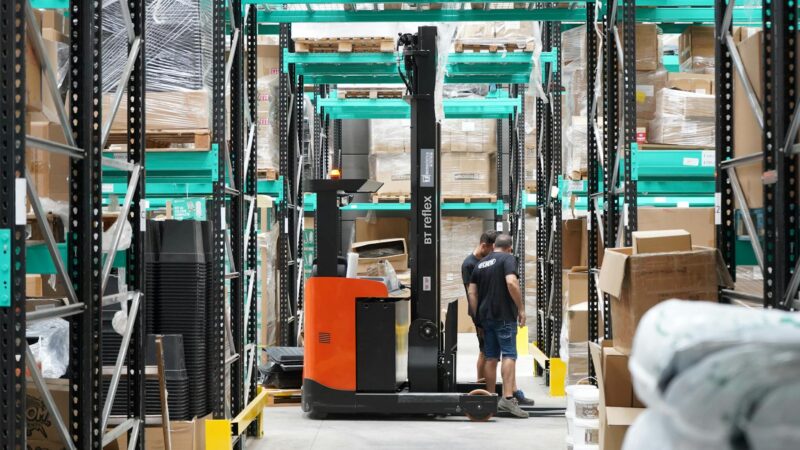
Zoho for Indian e-commerce sellers: multi-channel inventory sync with Amazon and Flipkart, Shiprocket shipping, Desk…
Tell us what you are actually trying to do. You will get a straight answer from a senior architect who has done this before, not a sales rep.
A senior architect will get back to you at , usually within a couple of working days. Worth checking your spam folder, just in case.
Ask it now and a senior architect will get back to you, usually within a couple of working days. It goes to our team, not a mailing list.
A senior architect will get back to you at , usually within a couple of working days. Worth checking your spam folder, just in case.