
Blog
Zoho Desk + Zoho CRM + Exotel: Cloud Telephony for Indian Customer Service
On this page Indian customer service teams face a specific set of constraints that generic…
17 min read
Read article →
Choosing a Zoho implementation partner evaluation exercise is rarely simple for a builder or EPC contractor in India. The work is messy. Site engineers raise indents on WhatsApp, store keepers maintain a paper register, accountants chase RA bills in Excel, and the project head stitches together a weekly MIS at midnight on Sunday. A good zoho implementation partner construction India team understands this reality before they touch a single module. They know what a BOQ is, why retention is held at 5 or 10 percent, how RERA escrow accounts work, and why the procurement officer cares more about lead time than discount percentage. This guide is written for promoters, finance heads, and project directors at construction and infrastructure firms who are trying to figure out what to ask, what to budget, and what to expect.
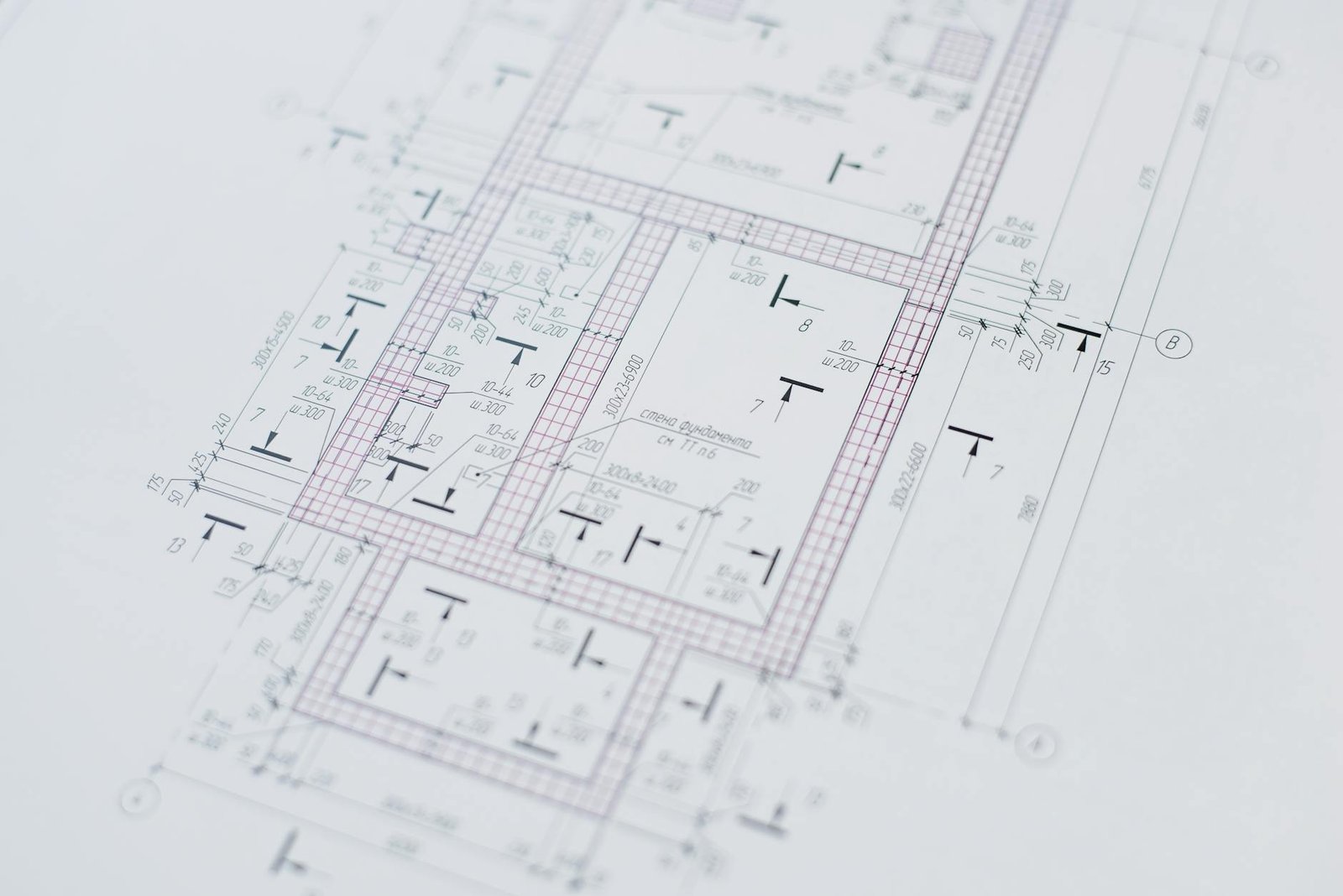
Construction is not retail. The cash cycle is long, the cost structure is project-based, and the regulatory exposure sits across GST, TDS, RERA, labour cess, and contract law. A generalist Zoho consultant will configure CRM and Books beautifully and then stall when you ask them to model a running account bill with retention and material advance recovery. They will not know that a percentage completion method needs to reconcile to certified work, not raised invoices. They will not understand why your purchase team refuses to use a system that does not let them split a single PO across three delivery sites.
A partner with construction experience walks in with a vocabulary that matches yours. They know the difference between a BOQ rate and a market rate, between a debit note and a deduction in an RA bill, between a subcontractor work order and a labour contract. That shared language cuts the requirement gathering phase from eight weeks to three.
It is not a logo wall of construction clients. Ask the partner to walk you through how they configured retention recovery in Books for their last builder client. Ask how they handled GST input credit blockage on civil works for a hotel project. Ask how they built a vendor advance recovery schedule in Creator. If they answer in specifics, they have done the work. If they answer in generalities, they have only sold to construction firms, not delivered for them.
Most construction firms in India do not need every Zoho app. They need six core ones, configured to talk to each other cleanly. The right Zoho for construction in India stack usually looks like this.
Zoho CRM holds leads, channel partners, site visits, and booking pipelines for residential and commercial projects. For EPC firms it holds tender opportunities, qualification stages, and bid submissions. Zoho Projects manages the work breakdown, milestones, and task dependencies for each project. Zoho Books runs the chart of accounts, GST returns, vendor payments, and customer billing. Zoho Inventory tracks materials at central stores and project sites with stock transfers between locations. Zoho Creator hosts the custom forms that the standard apps cannot cover, such as site indents, daily progress reports, labour attendance, and quality checklists. Zoho Analytics pulls everything together into project profitability, cash flow, and RERA dashboards.
The hard part is not setting up each app. It is the joins between them. A material received note in Inventory has to update the project cost in Projects and post to the right ledger in Books. A subcontractor RA bill raised through Creator has to flow into Books as a vendor bill with the correct TDS section and GST treatment. A booking in CRM has to create a customer ledger in Books and trigger a payment schedule in Creator. These integrations are what separate a working system from a collection of disconnected apps.
Bill of Quantities is the spine of every construction contract in India. The BOQ defines what will be built, in what quantities, at what rates. Every progress claim, every cost report, every variation is measured against it. A partner who does not understand BOQ structure cannot build a useful system.
The standard approach is to load each project BOQ as an item group in Zoho Books with quantities and rates. Work done is captured periodically as a measurement sheet, either in Creator or as an upload from the site engineer. The system calculates cumulative work done, deducts previous certifications, applies retention and recovery, adds GST, and produces the running account bill. Deviation items are tracked separately so the project head can see budget versus actual at the line item level.
A proper RA bill template in Zoho Books carries cumulative quantity, current period quantity, BOQ rate, current value, less retention, less mobilisation advance recovery, less material advance recovery, plus price escalation if applicable, plus GST at the contract rate, less TDS under section 194C or 194Q, and the net payable. Building this template is a one-time exercise that pays back every month for the life of the project.
Site procurement is where most ERP rollouts in Indian construction die. The site engineer needs steel by Wednesday. The store keeper has run out of binding wire. The procurement officer is sitting in the head office with three other indents in his queue. If the system makes it harder than WhatsApp, the site will go around it within a month.
A construction-aware Zoho partner builds a Creator app that the site engineer can use on a phone in two minutes. Material code, quantity, required date, project, urgency. Submit. The indent flows to the store keeper for stock check, then to the project manager for budget approval, then to procurement for vendor selection and PO. The vendor gets the PO by email. The material arrives at site, the store keeper records the GRN on the same Creator app, and the entry posts to Books and Inventory automatically.
The vendor master is usually the dirtiest table in any construction company. The same supplier exists three times with different spellings. GST numbers are missing or wrong. Bank details are stored in the procurement officer’s notebook. Cleaning this up before go-live is non-negotiable. A good partner will run a vendor cleansing workshop, dedupe records, validate GST numbers against the GSTN portal, and load a clean master into Books.
Real estate developers in India live with RERA. Every state regulator wants quarterly progress reports, project escrow utilisation, booking status, and construction milestone updates. The data exists across Books, CRM, and Projects, but it never sits in one place naturally. A partner builds Zoho Analytics dashboards that pull the numbers in the format required by MahaRERA, K-RERA, or whichever regulator applies.
GST on construction is its own minefield. Affordable housing attracts 1 percent without ITC. Other residential is 5 percent without ITC. Commercial is 12 percent with ITC. Works contracts for government are 12 percent. Mixed-use projects need careful allocation. The partner has to configure tax rates correctly at the project level so that the GST returns generated from Books match what the auditor expects.
For residential developers, booking generates a payment schedule linked to construction milestones. Zoho does not handle this natively. A partner builds a Creator module that holds the schedule, raises demand letters automatically when a milestone is achieved, tracks ageing, and feeds collection forecasts into the cash flow dashboard. Without this, the finance team is stuck running a parallel Excel for collections, which defeats the purpose of the system.
The difference shows up in scoping accuracy, configuration speed, and how many surprises hit you in user acceptance testing. The table below sets out what to expect from each type of partner on a typical mid-size construction implementation.
| Dimension | Generalist Zoho partner | Construction-experienced partner |
|---|---|---|
| Requirement workshop length | 6 to 8 weeks, lots of basic education needed | 2 to 3 weeks, jumps straight to edge cases |
| BOQ and RA bill configuration | Often quoted as out of scope or treated as Excel upload | Built into the standard scope as a Books template plus Creator workflow |
| RERA reporting | Handled outside the system in Excel | Analytics dashboard mapped to state regulator format |
| Site procurement flow | Email or web form, low site adoption | Mobile-first Creator app, designed for two-minute submission |
| Vendor master cleanup | Customer’s responsibility | Included as a structured cleansing workshop |
| Subcontractor RA bills | Manual vendor bill entry in Books | Creator form that calculates retention, recovery, and TDS automatically |
| Implementation timeline | 26 to 36 weeks with multiple rework cycles | 14 to 20 weeks with phased go-live |
| Hypercare focus | Bug fixing | Site adoption and month-end close support |
A realistic scope for a mid-size builder or EPC contractor covers six to eight modules over four phases. Phase one is finance and procurement: Books, Inventory, vendor master, chart of accounts, GST, and a basic indent flow. Phase two is project execution: Zoho Projects setup for India, BOQ loading, RA bill templates, and subcontractor management. Phase three is sales and customer management: CRM for bookings or tenders, payment schedules, and collection workflows. Phase four is analytics and RERA: dashboards, MIS, and any state-specific reporting.
For a firm with 30 to 100 users running two to five active projects, total implementation fees usually land between 6 and 18 lakh rupees. Annual Zoho One licences are separate and run roughly 30 to 36 thousand rupees per user per year at standard list price. Discounts of 10 to 20 percent are common for firms that commit to multi-year contracts through a partner. Real estate developers should also look at a Zoho implementation partner for real estate with specific RERA experience, since the reporting overhead is heavier than for pure EPC contractors.
Trying to go live on every module on the same day is the most common reason construction ERP projects fail. A phased approach lets the finance team stabilise on Books before the site team is asked to learn indenting. It lets the project team prove out one project on the new system before the others migrate. It gives the partner room to fix mistakes without holding up the entire business. Anonymised example: a Pune-based EPC contractor with eight active road projects went live on Books and procurement first, ran for six weeks, then onboarded Projects and RA bills for two pilot projects, then rolled out to the remaining six over the next two months. Total elapsed time was 18 weeks. A big-bang attempt by a previous vendor had collapsed at week 22 with nothing in production.
How long does a Zoho implementation for an Indian construction firm usually take?
For a mid-size builder or EPC contractor running two to five active projects, a phased rollout covering CRM, Books, Projects, Inventory, and basic Creator forms typically takes 12 to 20 weeks. The first 4 to 6 weeks go into BOQ structures, chart of accounts mapped to construction GST slabs, and RA bill templates. Site rollout and vendor onboarding usually run in parallel from week 6 onwards.
Can Zoho handle BOQ-based billing and RA bills for construction projects?
Yes, but it needs configuration. BOQ items are usually held in Zoho Books or Zoho Inventory as item groups, with quantities tracked against each project in Zoho Projects. RA bills are generated as custom invoice templates that pull cumulative work done, retention amounts, GST at 12 or 18 percent, and TDS at the correct section. A construction-experienced partner sets these up so site engineers can raise certificates without touching accounting.
Does Zoho support RERA reporting requirements for Indian real estate developers?
Zoho does not produce RERA quarterly reports out of the box. A partner builds Zoho Analytics dashboards and Creator forms that capture booking, collection, construction progress, and escrow utilisation in the format required by state RERA portals. The data still has to be uploaded manually to MahaRERA, K-RERA, or other state regulators, but the source numbers come from one clean Zoho ledger instead of three different Excel files.
What is the typical cost of a Zoho implementation for a construction company in India?
For a builder or EPC contractor with 30 to 100 users, implementation fees usually fall between 6 and 18 lakh rupees depending on scope. This covers requirement workshops, BOQ and RA bill configuration, procurement and indent flows, RERA dashboards, training, and three months of hypercare. Annual Zoho One licences are separate and run roughly 30 to 36 thousand rupees per user per year at standard pricing.
Aaxonix Tech configures Zoho for Indian builders, EPC contractors, and real estate developers, including BOQ workflows, RA bills, RERA dashboards, and site procurement on mobile. Book a free 30-minute consultation to scope your implementation.
Book a free consultationPicking the right Zoho partner for a construction business in India is less about app expertise and more about understanding how money, materials, and certified work move through a project. The firms that get this right end up with a finance team that closes books on the fifth, project heads who see live cost overruns instead of monthly surprises, and site engineers who raise indents in two minutes from a phone. The wrong partner leaves you with an expensive Excel replacement. The right one builds you a system the business actually uses.
Tell us what you are working through and a senior architect from our team will get back to you with a straight answer, usually within a couple of working days. No bot, no hard sell.
A senior architect will get back to you at , usually within a couple of working days. Worth checking your spam folder, just in case.
On this page Indian customer service teams face a specific set of constraints that generic…

On this page Marketing agencies run on relationships, retainers and renewals. The new business pipeline…

A detailed comparison of Zoho Books and Tally for Indian businesses. Covers pricing, GST compliance,…
Tell us what you are actually trying to do. You will get a straight answer from a senior architect who has done this before, not a sales rep.
A senior architect will get back to you at , usually within a couple of working days. Worth checking your spam folder, just in case.
Ask it now and a senior architect will get back to you, usually within a couple of working days. It goes to our team, not a mailing list.
A senior architect will get back to you at , usually within a couple of working days. Worth checking your spam folder, just in case.