

Blog
Zoho Desk vs Freshdesk for Indian SMBs: Pricing, GST Billing, and Which One to Choose
Compare Zoho Desk and Freshdesk for Indian SMBs. INR pricing, GST billing, AI features, and…
13 min read
Read article →
Most B2B sales teams spend hours each week building forecasts that miss by 20 to 40 percent. That gap is not a math problem. It is a data quality problem, a process problem, and sometimes a culture problem. Knowing how to improve sales forecast accuracy means fixing all three, not just picking a better spreadsheet formula. This post breaks down the specific methods, CRM disciplines, and forecasting cadences that high-performing revenue teams use to get within 5 to 10 percent of actual attainment, quarter after quarter. If you manage a pipeline of any meaningful size and your forecasts still feel like guesses, this guide gives you a concrete path forward.

A forecast number sitting in a slide deck does almost nothing. What matters is what your organization does with it: hiring decisions, inventory commitments, cash flow planning, board communication. When the forecast is consistently wrong, those downstream decisions compound the error. A company that misses its forecast by 30 percent two quarters in a row does not just miss revenue targets; it erodes trust with investors, over-extends on headcount, or under-invests in pipeline at the exact moment it should be accelerating.
The cost is measurable. Gartner research has consistently shown that companies with high forecast accuracy, defined as within 10 percent of actual results, grow revenue faster than peers who do not. The mechanism is straightforward: accurate forecasts let leaders make better resource allocation decisions faster, with less wasted motion.
Each of these is fixable. The sections below address them in order of impact.
Before improving accuracy, you need clarity on which forecasting method your team is actually using and whether it fits your sales motion. Different models suit different deal structures, sales cycles, and data maturities.
This is the most widely used B2B forecasting approach. Each pipeline stage is assigned a probability percentage, and the forecast is the sum of (deal value x probability) across all open opportunities. The weakness is that the probabilities are usually set once during CRM setup and rarely updated to reflect actual win rates by stage. A deal that has sat in “Proposal Sent” for 90 days should carry a different weight than one that just entered that stage.
Reps classify each deal into a commit, best case, or pipeline bucket based on their subjective read of buyer intent. This adds qualitative signal that weighted pipeline misses, but it requires disciplined definitions and consistent calibration across the team. Without that, “commit” means something different to every rep.
This model uses past win rates by stage, deal size, segment, or product line to build a statistical forecast. It is more reliable than rep-submitted numbers but requires at least 12 to 18 months of clean CRM history to be meaningful. Many teams underestimate the data quality requirement here.
Modern CRMs and dedicated revenue intelligence platforms use machine learning to score deals based on engagement signals, activity history, and historical patterns. This approach is covered in depth below. It tends to outperform all the above methods when the underlying data is clean enough to train on.
| Model | Best for | Main limitation | Data requirement |
|---|---|---|---|
| Weighted pipeline | Teams with consistent deal stages | Static probabilities go stale | Low |
| Category-based | Complex enterprise deals | Subjective without calibration | Low |
| Historical win rate | Mature teams with clean history | Lags when market conditions shift | High |
| AI-assisted | Mid-market and enterprise teams | Requires clean activity data | Very high |
Most mature RevOps teams use a hybrid: category-based submissions from reps, checked against weighted pipeline math, and validated by AI scoring where available.
No forecasting model can compensate for a dirty pipeline. Pipeline hygiene is not about aesthetics; it is about ensuring that every number in your forecast is grounded in a real, qualified, current opportunity. Following sales pipeline best practices is the single highest-impact action most B2B teams can take before touching their forecast model.
Each pipeline stage should have a concrete buyer action as its entry criterion, not a seller action. “Demo scheduled” is a seller action. “Prospect confirmed budget and timeline on discovery call” is a buyer signal. When stage entry criteria are buyer-driven, probability estimates become more defensible and forecasts become more reliable. If your team is starting from scratch with this, the step-by-step guide on how to build a sales pipeline in Zoho CRM covers stage configuration in detail.
Write these definitions down. Put them in your CRM as stage descriptions. Run a calibration session with your team every quarter to confirm everyone is applying them the same way.
The single most corrupting input in most B2B CRMs is the close date field. Reps set it optimistically at the start and never update it. A deal with a close date that has passed three months ago is not a forecast item; it is noise. Enforce a rule: any deal with a close date in the past must be updated or moved to a specific holding stage. Automate this in your CRM where possible.
Weekly pipeline reviews should not be recitations of numbers. They should be deal-level conversations: who have you spoken to this week, what did the buyer say, what is the next mutually agreed step? Reps who cannot answer these questions about a “commit” deal are submitting optimistic placeholders, not forecasts.
Most pipelines are at least 20 to 30 percent inflated with deals that have gone cold. These deals distort your weighted pipeline forecast and create false confidence. Build a rule for each stage: if a deal has had no activity in X days, it automatically drops to an earlier stage or moves to a dormant category. This forces reps to either re-engage or acknowledge the deal is not real pipeline.
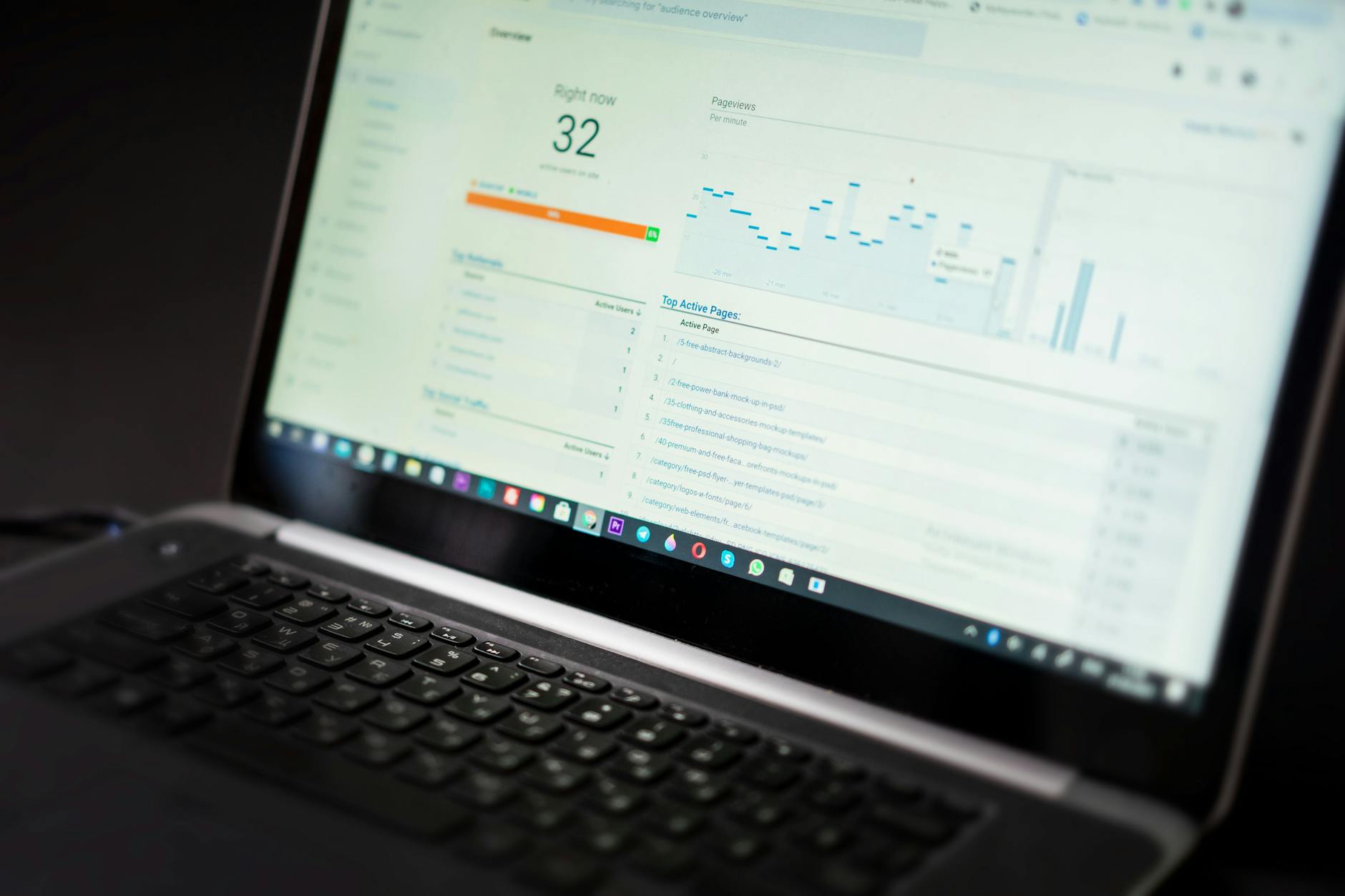
Your CRM is only as useful as the data inside it. Improving CRM forecast accuracy requires both better data entry habits and smarter use of the data you already have. Getting your Zoho CRM forecasting configuration right is where most teams should start before layering process changes on top.
Most CRMs track dozens of fields, but only a handful are predictive. Based on patterns across B2B sales data, these are the fields most correlated with accurate forecasting:
If these fields are not in your CRM, add them. If they are there but not filled in, make them required at specific stage transitions.
AI-based forecasting models rely on activity signals: calls logged, emails sent, meetings held, documents shared. If your reps are doing those activities but not logging them, your CRM data is blind to real deal progress. Modern CRMs can auto-capture email and calendar activity through Zoho CRM’s email and calendar sync, which dramatically reduces manual logging burden while improving data completeness.
Most teams set weighted pipeline probabilities during initial CRM setup and never revisit them. Run a quarterly analysis: for each pipeline stage, what percentage of deals that entered that stage over the last four quarters actually closed? Use that number, not the vendor default or your initial guess. If your CRM shows 60 percent probability for “Proposal Sent” but your actual close rate from that stage is 28 percent, your weighted forecast is inflated by more than double.
AI-assisted forecasting has moved from vendor buzzword to practical tool over the last three years. When implemented on clean data, it consistently outperforms rep-submitted forecasts in accuracy. The reason is that machine learning models identify patterns in deal activity that human intuition misses: deals that look strong on the surface but show declining engagement signals, or deals that look stalled but have the activity profile of past closers.
Understanding how Zia AI scores deals and what signals it weights helps you configure the system to produce better output rather than just trusting a black-box score.
AI models trained on incomplete or inconsistently entered CRM data will produce unreliable scores. This is the “garbage in, garbage out” problem at its most consequential. If your activity logging completeness is below 70 percent, AI scoring will not be trustworthy until you fix the data problem first. AI forecasting is a multiplier on good data discipline, not a substitute for it.
The best-performing revenue teams use AI scores as a cross-check on rep submissions, not a replacement for them. When a rep submits a deal as a commit and the AI scores it below 40 percent, that is a conversation to have in your forecast review, not an automatic override. The goal is to use the signal to ask better questions, not to remove human accountability from the process.
A forecast process that exists only on paper, or that reps treat as a formality before the real conversation with their manager, produces garbage output regardless of the model used. The cadence needs to be short enough to run consistently and substantive enough to surface real signal.
Each manager reviews their team’s current-quarter pipeline at the deal level. Focus on: anything that moved stages this week, anything in commit with a close date within 30 days, and any deal that had a close date pass without moving. Keep these reviews fast and fact-based, not motivational.
Reps submit a forecast using clearly defined categories. Write these definitions and make them visible in your CRM:
At the end of each month, compare your forecast to what actually closed. Specifically: which category did each closed deal come from? If you are regularly closing deals from “pipeline” that were not in “commit,” your commit criteria are too conservative. If deals are falling out of commit, your criteria are too loose. Use this data to recalibrate category definitions with your team.
Once per quarter, run a deeper analysis: win rate by stage, average deal cycle by segment, accuracy of AI score vs. actual outcome, and which reps had the best forecast accuracy (not just quota attainment). Accuracy is a skill that can be developed with the right feedback loop.

Before you can improve sales forecast accuracy, you need to measure your current baseline honestly. Many teams track attainment (did we hit quota?) but not accuracy (did we forecast the right number?).
The standard formula: Forecast Accuracy % = 1 – (|Forecast – Actual| / Actual) x 100
If you forecast $1.2M and closed $1.0M, your accuracy is 1 – (200,000 / 1,000,000) = 80 percent. Run this at the team level and at the individual rep level every quarter.
| Accuracy level | What it means | Typical root cause |
|---|---|---|
| Below 70% | Forecast is not usable for planning | No stage discipline, stale data |
| 70–80% | Acceptable but costly | Inconsistent commit definitions |
| 80–90% | Solid, supports good planning | Occasional late surprises |
| 90%+ | High-performance level | Strong cadence, AI assist, clean data |
Track these metrics in your Zoho CRM reporting dashboard, not in a separate spreadsheet. The more friction there is in accessing the data, the less likely it is to drive behavior change.
What is a realistic target for B2B sales forecast accuracy?
Most B2B sales teams with structured processes and clean CRM data can achieve 80 to 90 percent forecast accuracy. Teams using AI-assisted forecasting on top of good pipeline hygiene often reach 90 percent or better. Below 70 percent is a signal that either your pipeline data is unreliable or your commit definitions are inconsistent. Start by measuring your current baseline before setting a target.
How often should a B2B sales team update its forecast?
Most teams benefit from a bi-weekly formal forecast submission at the rep level, combined with weekly deal-level pipeline reviews at the manager level. Monthly variance analysis (forecast vs. actual) and a quarterly retrospective round out the cadence. More frequent updates are useful in short-cycle businesses; less frequent reviews work only if your deal cycle is very long and your pipeline is stable.
Does AI forecasting replace traditional weighted pipeline models?
Not entirely, and not yet for most teams. AI forecasting adds a predictive layer on top of existing models by scoring deals based on engagement signals and historical patterns. It works best as a cross-check on rep-submitted forecasts rather than as a standalone replacement. The prerequisite is clean, consistently logged CRM activity data. Teams without that foundation will not get reliable AI scores.
What is the most common reason sales forecasts are wrong?
Stale or incomplete CRM data is the most common cause. This includes close dates that are never updated, deal stages that do not reflect actual buyer conversations, and activity records that rely entirely on manual rep entry. The second most common cause is undefined or inconsistently applied commit criteria, which means different reps are classifying deals differently in the same category.
How much pipeline coverage do you need for an accurate forecast?
A general guideline is 3x to 4x your target revenue in qualified pipeline at the start of a quarter. This gives you enough coverage to absorb slippage and late-stage losses while still hitting your number. The right ratio depends on your win rate and average deal cycle. If your win rate from qualified pipeline is 35 percent, you need closer to 3x. If it is 20 percent, you need 5x or more.
Want to build a forecasting process that actually holds? Aaxonix helps B2B sales teams configure their CRM, define pipeline stages, and set up AI-assisted forecasting so their numbers are reliable enough to plan against.
Talk to a sales ops consultantImproving how to improve sales forecast accuracy is not a one-time project. It is a set of disciplines that compound: cleaner pipeline data feeds better weighted models, better models give AI tools something reliable to learn from, and reliable forecasts give leadership the confidence to make bigger bets without waiting for certainty. Pick the highest-impact gap from this guide, fix it this quarter, then move to the next. Most teams see measurable accuracy improvements within two forecast cycles when they address stage definitions and close date discipline first.
Tell us what you are working through and a senior architect from our team will get back to you with a straight answer, usually within a couple of working days. No bot, no hard sell.
A senior architect will get back to you at , usually within a couple of working days. Worth checking your spam folder, just in case.
Compare Zoho Desk and Freshdesk for Indian SMBs. INR pricing, GST billing, AI features, and…

Hire a Zoho implementation partner for education in India. Admissions, fees, attendance, and edtech workflows…
On this page Indian customer service teams face a specific set of constraints that generic…
Tell us what you are actually trying to do. You will get a straight answer from a senior architect who has done this before, not a sales rep.
A senior architect will get back to you at , usually within a couple of working days. Worth checking your spam folder, just in case.
Ask it now and a senior architect will get back to you, usually within a couple of working days. It goes to our team, not a mailing list.
A senior architect will get back to you at , usually within a couple of working days. Worth checking your spam folder, just in case.