
Blog
Zoho Flow: No-Code Automation for Indian Businesses
Automate business workflows with Zoho Flow: CRM to Books, Razorpay to CRM, WhatsApp notifications, and…
7 min read
Read article →
Zoho SalesIQ live chat and visitor tracking gives you visitor tracking, live chat, and a bot framework out of the box. ChatGPT, through the OpenAI API, gives you natural language understanding that can handle nuanced customer questions without rigid decision trees. The Zoho SalesIQ ChatGPT integration combines both: a Zobot that calls the OpenAI Chat Completions API, grounds responses in your knowledge base, and hands off to a human agent when it cannot help. This guide walks through the full implementation, from creating the Zobot to writing the Deluge script, managing conversation context, and keeping API costs under control.
By the end, you will have a working chatbot on your website that answers product questions using your own documentation, handles multi-turn conversations, and routes complex queries to your support team. No third-party middleware required, just SalesIQ, Deluge, and the OpenAI API.
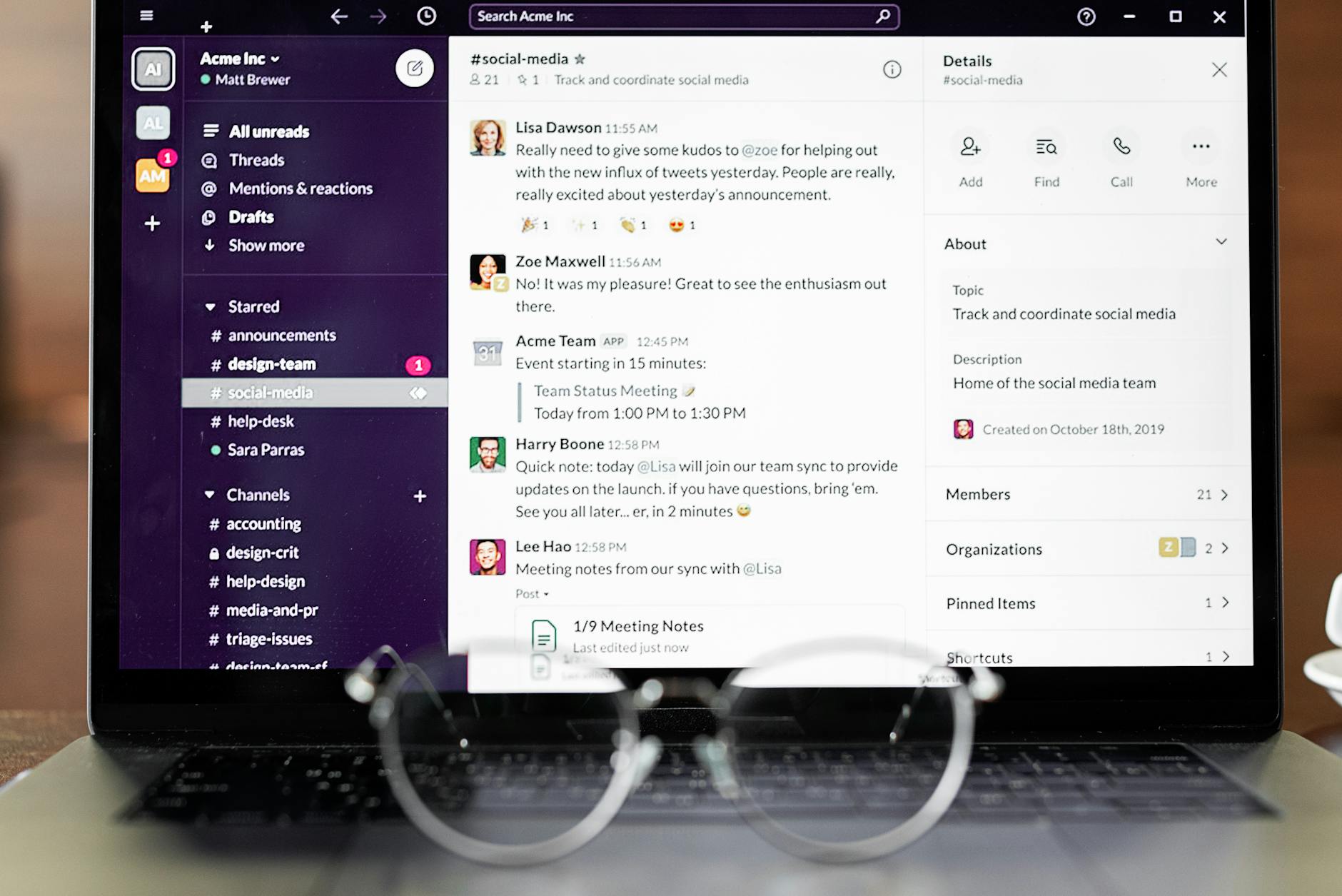
The default SalesIQ Answer Bot works well for FAQ-style questions where a visitor’s query matches a knowledge base article. It struggles with open-ended questions, follow-up context, and anything that requires synthesizing information from multiple articles. ChatGPT fills that gap.
Here is what the integration gives you compared to the standard bot:
| Capability | Answer Bot (default) | Zobot + ChatGPT |
|---|---|---|
| FAQ matching | Keyword/NLP match | Semantic understanding |
| Multi-turn context | Limited | Full conversation history |
| Open-ended questions | Falls back to agent | Generates contextual answers |
| Knowledge grounding | Article-level | Custom prompt with full context |
| Tone and style control | Template-based | Configurable via system prompt |
| Coding required | No | Yes (Deluge script) |
For businesses already using Zoho SalesIQ for live chat and visitor tracking, adding ChatGPT to an existing Zobot is a relatively small engineering effort with a measurable impact on first-response resolution rates.
Before writing any code, confirm you have the following in place:
The OpenAI integration in SalesIQ enables the native open_ai action in Deluge, but for full control over prompts and context, you will use invokeurl to call the API directly. Both approaches work; direct API calls give you more flexibility for knowledge base grounding.
Navigate to SalesIQ > Bots > Zobot and create a new bot. Choose “Custom Script” as the handler type. This gives you a Deluge script editor where you write the logic that runs every time a visitor sends a message.
The Zobot script runs on every visitor message. The basic flow is:
response.get("message")invokeurlHere is the skeleton script:
// Zobot Custom Script, ChatGPT Integration
visitor_message = response.get("message");

if(visitor_message != null && visitor_message != "")
{
    // Build the API request
    system_prompt = "You are a helpful customer support assistant for [Your Company]. Answer questions based only on the following knowledge base. If you do not know the answer, say ESCALATE.";

    kb_context = "Product: ... | Pricing: ... | Return policy: ...";

    messages = List();
    messages.add({"role": "system", "content": system_prompt + "

Knowledge Base:
" + kb_context});
    messages.add({"role": "user", "content": visitor_message});

    payload = Map();
    payload.put("model", "gpt-4o-mini");
    payload.put("messages", messages);
    payload.put("max_tokens", 500);
    payload.put("temperature", 0.3);

    api_response = invokeurl
    [
        url: "https://api.openai.com/v1/chat/completions"
        type: POST
        parameters: payload.toString()
        headers: {"Authorization": "Bearer YOUR_OPENAI_API_KEY", "Content-Type": "application/json"}
    ];

    reply = api_response.get("choices").get(0).get("message").get("content");

    if(reply.contains("ESCALATE"))
    {
        // Hand off to human agent
        response.set("action", "forward");
        response.set("department", "Support");
        response.reply("Let me connect you with a support agent who can help further.");
    }
    else
    {
        response.reply(reply);
    }
}
This is the foundation. The sections below add conversation context, knowledge base grounding, and rate limiting on top of it.

The biggest risk with a ChatGPT-powered chatbot is hallucination, the model generating plausible but incorrect answers. Knowledge base grounding solves this by constraining the model’s responses to your actual documentation.
Your system prompt should include the specific information the chatbot needs to reference. There are two approaches:
Static context: paste your FAQ, product specs, pricing, and policies directly into the system prompt. This works for businesses with fewer than 50 FAQ entries. You update the Deluge script whenever the information changes.
Dynamic context: store your knowledge base in Zoho Creator or a Zoho CRM custom module and fetch relevant records at runtime using a Deluge zoho.crm.getRecords call before building the prompt. This scales better and keeps the bot current without script changes.
The system prompt controls the chatbot’s behavior. A well-structured prompt for a support chatbot includes:
Keep the system prompt under 3,000 tokens to leave room for conversation history and the model’s response within the context window.
A chatbot that forgets the previous message is frustrating. To maintain multi-turn context, you need to store and replay conversation history with each API call.
SalesIQ provides response.get("chatHistory") in the Zobot script, which returns the recent messages. You can also use Zoho SalesIQ’s session storage to persist data across messages within the same chat session:
// Store and retrieve conversation context
chat_history = response.get("chatHistory");
stored_context = zoho.salesiq.session.get("conv_context");

messages = List();
messages.add({"role": "system", "content": system_prompt + "

" + kb_context});

// Add previous exchanges from history
if(stored_context != null)
{
    prev_messages = stored_context.toJSONList();
    for each msg in prev_messages
    {
        messages.add(msg);
    }
}

// Add current message
messages.add({"role": "user", "content": visitor_message});

// After getting the reply, store updated context
new_context = List();
if(stored_context != null)
{
    new_context.addAll(stored_context.toJSONList());
}
new_context.add({"role": "user", "content": visitor_message});
new_context.add({"role": "assistant", "content": reply});

// Keep only last 10 messages to manage token costs
if(new_context.size() > 10)
{
    new_context = new_context.subList(new_context.size() - 10, new_context.size());
}

zoho.salesiq.session.set("conv_context", new_context.toString());
Limiting the history to 10 messages (5 exchanges) balances context quality with API cost management. Each additional message adds to the token count and therefore the cost per request.
No chatbot should be a dead end. When the AI cannot help, the visitor needs a path to a human. SalesIQ’s Zobot provides built-in handoff actions that make this straightforward.
Configure your bot to escalate in these scenarios:
// Escalation logic
escalation_phrases = {"talk to a person", "human agent", "speak to someone", "real person", "live agent"};
needs_human = false;

for each phrase in escalation_phrases
{
    if(visitor_message.toLowerCase().contains(phrase))
    {
        needs_human = true;
        break;
    }
}

if(needs_human || reply.contains("ESCALATE") || msg_count > 8)
{
    response.set("action", "forward");
    response.set("department", "Support");
    response.reply("I am connecting you with a support agent now. They will have the full context of our conversation.");
}
The agent who picks up the chat sees the entire conversation history in SalesIQ, including both the visitor messages and the bot’s responses. This eliminates the need for the visitor to repeat themselves. For teams using Zoho Desk alongside SalesIQ, the chat can automatically create a ticket with the full transcript attached.
OpenAI API calls cost money and have rate limits. A production chatbot needs safeguards against runaway costs and graceful handling of API errors.
| Model | Input (per 1M tokens) | Output (per 1M tokens) | Typical chat cost |
|---|---|---|---|
| GPT-4o | $2.50 | $10.00 | ~$0.02/conversation |
| GPT-4o-mini | $0.15 | $0.60 | ~$0.002/conversation |
| GPT-3.5 Turbo | $0.50 | $1.50 | ~$0.004/conversation |
For most customer support chatbots, GPT-4o-mini delivers strong results at a fraction of GPT-4o’s cost. A site handling 1,000 chat sessions per month with GPT-4o-mini would spend roughly $2 to $5 on API calls.
Wrap your API call in a try-catch block and implement retry logic for transient errors:
try
{
    api_response = invokeurl
    [
        url: "https://api.openai.com/v1/chat/completions"
        type: POST
        parameters: payload.toString()
        headers: {"Authorization": "Bearer " + api_key, "Content-Type": "application/json"}
        connection_timeout: 10000
    ];

    if(api_response.get("error") != null)
    {
        error_type = api_response.get("error").get("type");
        if(error_type == "rate_limit_exceeded")
        {
            response.reply("Our systems are experiencing high demand. Please try again in a moment, or I can connect you with an agent.");
        }
        else
        {
            response.set("action", "forward");
            response.set("department", "Support");
            response.reply("Let me connect you with a support agent.");
        }
    }
}
catch(e)
{
    response.set("action", "forward");
    response.set("department", "Support");
    response.reply("I encountered a temporary issue. Connecting you with a support agent now.");
}
Set a monthly spending cap in your OpenAI account settings as an additional safeguard. You can also use Zoho Flow to monitor API usage by tracking the token counts returned in each API response and triggering alerts when costs approach your budget.
Before pointing real visitors to the ChatGPT-powered Zobot, validate it thoroughly:
After deployment, track these metrics in the SalesIQ analytics dashboard: bot resolution rate (conversations resolved without agent), average response time, escalation rate, and visitor satisfaction scores. Zoho Zia’s analytics features can surface trends in the types of questions the bot handles well versus those that consistently escalate.
For a full overview of all available options, explore our complete guide to Zoho integrations.
For a complete setup walkthrough of Zoho SalesIQ itself, including visitor tracking, bot configuration, and CRM integration, see the Zoho SalesIQ guide. For Zoho’s own AI capabilities, the Zoho Zia AI guide covers what Zia does across the Zoho suite beyond chatbots.
Can I connect ChatGPT to Zoho SalesIQ without coding?
Yes. Zoho SalesIQ offers a codeless bot builder with a built-in ChatGPT card. You can drag the OpenAI action into your bot flow without writing Deluge scripts. However, for knowledge base grounding, custom prompts, and conversation context management, the Zobot custom script handler gives you much more control.
How much does the OpenAI API cost when used with Zoho SalesIQ?
OpenAI charges per token. GPT-4o costs approximately $2.50 per million input tokens and $10 per million output tokens. A typical chatbot conversation of 8 exchanges uses roughly 4,000 tokens total, costing about $0.02. For a site handling 500 chat sessions per month, expect $8 to $15 in monthly OpenAI costs with GPT-4o, or under $2 with GPT-4o-mini.
Does the Zoho SalesIQ ChatGPT integration work with GPT-4o?
Yes. The Zobot custom script handler calls the OpenAI Chat Completions API, which supports GPT-4o, GPT-4o-mini, and earlier models. You specify the model parameter in your invokeurl request body. GPT-4o-mini offers a good balance of quality and cost for most customer support use cases.
What happens when the chatbot cannot answer a question?
You should configure a confidence-based fallback in your Zobot script. When the OpenAI response does not match your knowledge base or the visitor explicitly asks for a human, the bot triggers a handoff to a live agent using the SalesIQ operator transfer action. This ensures no visitor query goes unanswered.
Can I limit the ChatGPT chatbot to only answer questions about my business?
Yes. This is called knowledge base grounding. You include your FAQ content, product details, and policy documents in the system prompt sent to the OpenAI API. The prompt instructs the model to only answer based on the provided context and to decline off-topic questions. This prevents the chatbot from generating responses about unrelated subjects.
Aaxonix configures and customizes Zoho SalesIQ chatbots with AI-powered response handling for businesses across industries, reducing support load by up to 40% within the first quarter. Book a free consultation to get a tailored chatbot implementation plan for your website.
Book a free consultationThe combination of Zoho SalesIQ’s visitor tracking and bot framework with ChatGPT’s natural language capabilities creates a support channel that works around the clock without the rigidity of traditional decision-tree bots. Start with GPT-4o-mini for cost efficiency, ground every response in your knowledge base, and keep the human handoff path clear. The technical setup takes a day; the ongoing refinement of your knowledge base and prompts is where the real value compounds over time.
Tell us what you are working through and a senior architect from our team will get back to you with a straight answer, usually within a couple of working days. No bot, no hard sell.
A senior architect will get back to you at , usually within a couple of working days. Worth checking your spam folder, just in case.
Automate business workflows with Zoho Flow: CRM to Books, Razorpay to CRM, WhatsApp notifications, and…

Compare Zoho One vs Google Workspace, Pipedrive and Zendesk on features, pricing at 15/30/60 users,…
A practical guide to Zoho CRM automation: how workflows, blueprints, macros, and scoring rules work…
Tell us what you are actually trying to do. You will get a straight answer from a senior architect who has done this before, not a sales rep.
A senior architect will get back to you at , usually within a couple of working days. Worth checking your spam folder, just in case.
Ask it now and a senior architect will get back to you, usually within a couple of working days. It goes to our team, not a mailing list.
A senior architect will get back to you at , usually within a couple of working days. Worth checking your spam folder, just in case.